



Sorted by date Results 1 - 25 of 528
Fall Management of Cheatgrass in Fallow Cheatgrass (Bromus tectorum), also commonly called downy brome, is a problematic weed in winter wheat and in rangeland throughout Montana. Cheatgrass typically germinates in the autumn, overwinters, and produces seed by mid-summer. The cheatgrass life cycle is similar to winter wheat. Cheatgrass is an abundant seed producer. Seeds are only viable for one to two years in the seedbank. Cheatgrass typically germinates from late August to early October and matures in early July. Cheatgrass can establish in...
Conifers Shed Most Inefficient Needles in the Fall The article below is a portion of an article written by Peter Kolb (MSU Extension Forester). The article is available in full at the Chouteau County Extension office. The article explains the natural phenomenon of fall needle drop, insect management, and proper watering techniques for pine and spruce trees. Every fall a lot of concern arises when conifers such as pines, spruces and firs start to drop their older needle cohorts in preparation for winter. This is essentially an energy conservatio...
September Horticulture Management Managing horticultural landscapes in September is essential to healthy production during the growing season. Below are a few recommendations for Chouteau County gardeners. •The average first frost is September 15 (Carter), September 18 (Kenilworth and Highwood), September 20 (Big Sandy), September 25 (Fort Benton) and September 28 (Geraldine). All fruit and vegetables should be harvested before temperatures drop below 40° to 50°F. •Ripen tomatoes in a paper bag along with an apple, or hang the entire plant...
By Tyler Lane The 2026 Chouteau County 4-H and FFA livestock carcass ultrasound contest took place at the Chouteau County Fairgrounds. A total of 67 animals were evaluated for carcass quality by Elin Kittelmann, Ultrasound Technician from Ekalaka. The purpose of the carcass contest is to teach youth how to correctly select, feed and finish livestock based on carcass data. If carcass criteria are met, youth can be confident they are producing a quality product that is safe, nutritious and good tasting to the consumer. Out of 39 market swine...
Thanks to Our Chouteau County 4-H Club Organizational Leaders The Chouteau County Fair concluded for the 4-H members on August 16, However, the work continues for our Chouteau County organizational leaders. Chouteau County MSU Extension would like to give special recognition to our 4-H organizational leaders for guiding and preparing our 4-H youth through meetings, competitions, workshops and the fair. The Chouteau County 4-H club organizational leaders include Kelly Crowder (Arrowhead), Justina Merja and Chandee Bomgardner (Stir Stitch...
Fall Fertilizer Advice for Farmers Information for this article was taken from the Fertilizer Guidelines for Montana Crops (EB161), which is available at the Chouteau County Extension office. •MSU Extension has an on-line tool designed to assist producers in determining the optimal N rate. The online tool can be found at www.sarc.montana.edu/AgTools/soiltest. •Fall soil tests can lead to over or under fertilized fields because soil nitrate can increase or decrease from November to April. •The historical average available N rate guideline at 2%...
Horticultural Advice for August Below are some rules of thumb when tending vegetables, lawns, flowers and trees during the month of August. •Renovate strawberries by mowing a minimum of every three years. Some people mow their strawberries every year following fruit production. Be sure to set the mower high enough to mow the leaves. Mowing too low may damage the crowns and kill the plant. •Topdress strawberries after harvest with a complete fertilizer like 16-16-16. •Pinch the tops of indeterminate tomatoes and reduce watering to promote ripen...
Beat the Heat: Protecting Cattle During Summer Heat Stress This article was written by Paul Beck, Oklahoma State University Extension Beef Nutrition Specialist. Summer heat stress reduces cattle performance, reproductive efficiency and animal welfare. Extreme heat stress may result in death. Heat stress is not determined by temperature alone. Humidity, direct sunlight, wind speed and the amount of nighttime cooling all influence the heat load cattle must manage. Cattle accumulate heat during the day and normally release much of it overnight....
A Special Thanks in Advance to our Chouteau County 4-H Fair Superintendents 4-H, the nation’s largest youth development organization, grows confident young people who are empowered for life today and prepared for a career tomorrow. 4-H programs help develop nearly six million young people across the U.S. through experiences that develop critical life skills. 4-H is the youth development program of our nation’s Cooperative Extension System and USDA. Cooperative Extension serves every county and reservation in the U.S. through a network of 110...
Top Yielding Winter Wheat Varieties for Chouteau County MSU Agricultural Research Centers have one test plot for winter wheat in Chouteau County which is managed by MSU Northern Agricultural Research Center (NARC) north of Loma. A special thanks to Peggy Lamb (NARC agronomist) for establishing and maintaining the Chouteau County test plot. The Extension office would also like to thank the McKeever family for donating the use of their land for MSU research. NARC (Loma area) top three yielding winter wheat varieties (10-year average yield) from 2...
Managing Nuisance Ants in and Around the Home Information for this article was written by Patrick Beauzay, NDSU Entomologist. Foraging worker ants sometimes enter homes in search of food, and if they find an indoor food source, the workers will leave chemical trails for other workers to follow. Food found either indoors or outdoors is carried to the nest to feed the colony. This behavior makes the use of ant baits an effective control measure. To keep ants from entering the home, make sure the kitchen is clean and no attractive food, like a...
Hailed Out and Emerged Volunteer Wheat Should be Sprayed Immediately after Harvest Information for this article was compiled from a Kansas State University Press Release in 2016. Producers often wait several weeks after harvest before making their first herbicide application to control volunteer wheat,” said Dallas Peterson, K-State Research and Extension Weed Management Specialist. “This allows as much volunteer as possible to emerge before spraying it or tilling it the first time. Often, a second application or tillage operation will be neede...
New World Screwworm Confirmation: The Bad and the Good News Article was written by Derrell S. Peel, Oklahoma State University Extension Livestock Marketing Specialist. For many months producers and markets have operated under the threat of New World Screwworm (NWS) coming into the U.S. Now that it’s here, we can get on with the reality of dealing with it. The bad news is that NWS will be costly and a management headache for affected producers and those nearby, along with industry and agency folks tasked with controlling and eradicating the p...
EARLY SEASON FUNGICIDE ON WHEAT Information for this article was written by Andrew Friskop from NDSU Extension Plant Pathology. The complete article is located at https://bit.ly/4vm5mHP. Cereal crops residue-borne diseases such as tan spot and Stagonospora nodorum blotch (SNB) are the primary targets for early-season fungicide application. Tan spot is more common than SNB in North Dakota (ND), but both diseases have shown a downward trend in prevalence in ND wheat fields over the past eight years. This can be largely attributed to the use of ma...
Mulching is a Must for Lawn and Garden Landscapes During the Hot Summer This article was written by Ron C. Smith, NDSU Extension Horticulturalist (Retired). The single most serious problem with ornamental plants in the Northern Plains region is not a disease, insect or mite problem; it is environmental stress. Stress affects plant material in direct and indirect ways. It can cause damage directly and weaken the plants to the point where they are vulnerable to insect and disease attack. Stress is a problem in the Plains region because we, in our...
The Risks of Hauling Pregnant Cows is Greatest in First Trimester The following article was written by Chevy-Lynn Vaske, Kansas State Extension Service. Transporting pregnant cows may seem routine, but timing and management decisions can have significant impacts on the success of the herd, according to experts from the Kansas State University Beef Cattle Institute. During a recent episode of the BCI Cattle Chat podcast, veterinarians and beef cattle experts emphasized that moving pregnant cattle requires careful consideration to avoid...
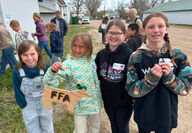
Thirteenth Annual Chouteau County Agriculture Day for 4th and 5th Graders (Reprint to add photos) The thirteenth annual Chouteau County Ag Day for 4th and 5th graders will take place at the Chouteau County Fairgrounds on May 5, 2026. All 4th and 5th graders in Chouteau County are invited to attend. Home school kids who are interested in participating need to contact the Chouteau County Extension Office at 622-3751. Youth will learn why agriculture is important to their health, home and...
Summer MSU Agricultural Field Days in the Golden Triangle The Montana State University College of Agriculture and Montana Agricultural Experiment Stations will once again host a series of field days at Havre, Moccasin, and Conrad. “We look forward to our field days every year because of the opportunities they create to interact and share research results with agricultural producers and friends around Montana,” said Sreekala Bajwa, director of the Montana Agricultural Experiment Stations and the College’s dean. “Getting to share and receive...
Alfalfa Weevil Information for this article was compiled by Dr. Kevin Wanner, previous MSU Extension Entomologist and Dr. Emily Glunk, previous MSU Extension Forage Specialist. Alfalfa weevil is the key insect pest of alfalfa, causing variable levels of economic damage across Montana. Females lay eggs in alfalfa stems. Larvae hatch and crawl up to developing terminal buds where they chew small “pin” holes in the leaves. Larvae develop through four instar stages. Larger 3rd and 4th instar larvae feed openly on unfurled leaves and cause the lar...
Helping You Prepare for the Gardening Season Believe it or not, the gardening season will be upon us before we know it. Below are a few gardening facts to help you prepare for the upcoming season. •Soil tests should be taken in the garden every three years. We have a great Montguide available at the Extension office which will help you understand your soil test results so you can determine how much fertilizer to apply. The Montguide is called “Home Garden Soil Testing and Fertilizer Guidelines.” •The best time to collect a soil sample is in the...
Thirteenth Annual Chouteau County Agriculture Day for 4th and 5th Graders The thirteenth annual Chouteau County Ag Day for 4th and 5th graders will take place at the Chouteau County Fairgrounds on May 5, 2026. All 4th and 5th graders in Chouteau County are invited to attend. Home school kids who are interested in participating need to contact the Chouteau County Extension Office at 622-3751. Youth will learn why agriculture is important to their health, home and community. For thousands of years, civilization has been built upon a foundation...
Making Springtime Fertilizer Decisions in 2026 According to Clain Jones, MSU Extension Soil Fertility Specialist, Dry soil conditions will result in less soil nutrient release and availability, though warmer conditions might have counteracted this to some degree. The question is how these conditions have affected soil nutrient levels and whether it’s worth re-sampling soil if it was sampled last fall.” In general, phosphorus, potassium and sulfur levels aren’t expected to change much from last fall, as dry conditions have likely preve...
10 Chouteau County Invitational Shoot Results The 4-H Shooting Sports 2026 Chouteau County Invitational Shoot was held February 28 in Fort Benton with 75 members registered to shoot. Participants were mostly from the Golden Triangle counties. Other counties participating were Liberty, Hill, Pondera, Cascade, Toole, Flathead, Lewis and Clark, Glacier, Teton, Wheatland and Gallatin. Medals went to the following Chouteau County participants: REGULAR TARGET Name Division Award Score Bradshaw, Theodore Bare Bow (ages 9-10) gold 215.00 Brown, Emma...
Many Reasons Why Deciduous Trees Should Not Be Topped Topping is the drastic removal or cutting back of large branches in mature trees. The tree is sheared like a hedge and the main branches are cut to stubs. Many homeowners top trees when they reach heights considered unsafe fearing a strong wind might blow large trees over. However, the extensive root system of a healthy tree provides adequate support for the tree. Below are a number of reasons why deciduous trees should not be topped. Starvation: Trees need leaves to manufacture starches...
Top Yielding Spring Wheat Varieties for Chouteau County Producers MSU Agricultural Research Centers have one test plot for spring wheat in Chouteau County which is managed by MSU Northern Agricultural Research Center (NARC) north of Loma. A special thanks to Peggy Lamb (NARC agronomist) for establishing and maintaining the Chouteau County test plot. The Extension office would also like to thank the McKeever family for donating the use of their land for MSU research. The Loma area top three yielding spring wheat varieties (10-year average...